Why Players Shake Hands Before the Match
Why players shake hands before the match: learn what the ritual signals, when it fits, and how it marks the shift from ordinary contact to contest.
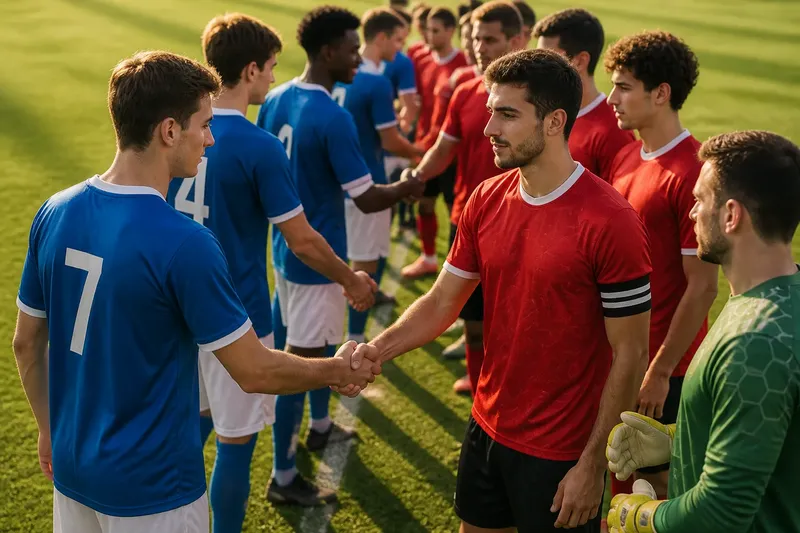
Why players shake hands before the match is easiest to understand at the sideline, just before play begins: opponents meet, exchange a brief gesture, then take their places. The handshake recognises the people about to compete and marks a change in how they will deal with one another. What fits depends on the sport, the setting and the participants, so the ritual is not a rule that every player must perform in the same way.
The ritual’s purpose
A handshake is a small public act with a clear boundary. Before it, players may be strangers arriving from separate teams or clubs. After it, they are opponents within an agreed contest. The gesture does not remove rivalry; it gives rivalry a social frame.
That frame matters because competition permits actions that ordinary interaction does not. A player may block, tackle or challenge an opponent under the game’s rules, yet is expected to recognise that the person opposite them remains a participant rather than a personal enemy. The greeting makes that distinction visible to players, officials and spectators.
Repeated gestures gain meaning through their place in a routine. A handshake before a match is not a promise of friendship, nor does it settle how either side will play. It is a concise acknowledgement: we are here to compete under shared terms.
Choose by setting
For a formal fixture: Use the greeting if it is part of the sport’s or organiser’s established pre-match routine. Players might shake hands in a line, greet opponents individually or acknowledge them as teams cross. Keep the exchange brief so the ritual supports the event without delaying its start.
For an informal game: A handshake can help when players have just met or when teams need a clear opening. A nod, wave or spoken greeting may fit better among familiar teammates or in a casual pick-up game. The point is recognition, not enforcing a particular gesture.
For a youth or community match: A simple, supervised greeting can show younger players that opponents deserve courtesy before and after competition. Adults should keep it relaxed and avoid turning the gesture into a test of character. A child who is uncomfortable with physical contact can acknowledge the other team in another respectful way.
For a match with an unfamiliar custom: Watch the team’s routine or ask an organiser what is expected. Follow the local practice if it is comfortable and appropriate; otherwise, use a clear verbal greeting or nod. Courtesy is easier to read when it does not rely on guessing what a gesture means.
When contact does not fit
Not every player wants or can manage hand-to-hand contact. Personal preference, disability, illness concerns, religious practice or simply the conditions of play may make a handshake unsuitable. A refusal or alternative greeting need not be read as hostility.
In that situation, respond without making the moment awkward: offer a nod, say “good luck”, or let the exchange pass. Do not insist on contact, demand an explanation or treat a different gesture as disrespect. The ritual works only when recognition is mutual; compulsory touch defeats that purpose.
Imagine a new player joining a community side whose opponents offer a handshake line. The player prefers not to shake hands, so they smile, nod to each person and say “good game” before play. The expected observable result is a clear greeting without physical contact, leaving both teams free to begin the match without making the preference a public dispute.
Handshakes and alternatives
The handshake is familiar, but it is not the only way to signal respect. A nod can be quick and visible across a space; a wave suits a larger group; a brief verbal greeting works when players are already close. In some sports, teams use a line or collective salute that recognises the whole opposing side rather than each person individually.
Choose an alternative that can be understood without interrupting the event. If you are greeting one opponent, a nod and a few words may be enough. If teams are assembled in lines, follow the group’s existing pattern rather than inventing a competing one. When a gesture is unclear, a calm “hello” is more useful than an elaborate display.
Keep the purpose in view: the gesture recognises an opponent as a fellow participant. It does not have to express warmth, admiration or agreement. A restrained greeting can be more appropriate than a theatrical one, especially in a tense fixture.
What should you do?
Is a handshake required before every match?
No single custom applies to every sport and setting. Follow the event’s established routine where one exists, and remember that a respectful alternative can serve when contact is unsuitable.
What if an opponent refuses a handshake?
Accept the refusal without pressing for a reason. A nod or brief greeting lets the match proceed while leaving room for personal boundaries.
Does a handshake mean there is no rivalry?
No. It recognises the opponent and the shared contest; it does not ask players to soften their competitive intent. Strong rivalry and basic courtesy can exist at the same time.
Should teams shake hands after the match too?
That depends on the sport and the event’s routine. Where teams do exchange greetings afterwards, the gesture can acknowledge the contest just completed; where they do not, a respectful departure is enough.
Keep the boundary clear
A pre-match handshake is most useful when it is brief, voluntary and understood by the people taking part. It marks the move from ordinary social contact into a contest governed by shared rules, while reminding everyone that the opponent remains a person beyond that contest.
When you are unsure what to do, greet the other side in a simple way that fits the setting and respects their response. That is the practical meaning behind why players shake hands before the match: not a promise to be friends, but a public recognition of who is about to compete and on what terms.